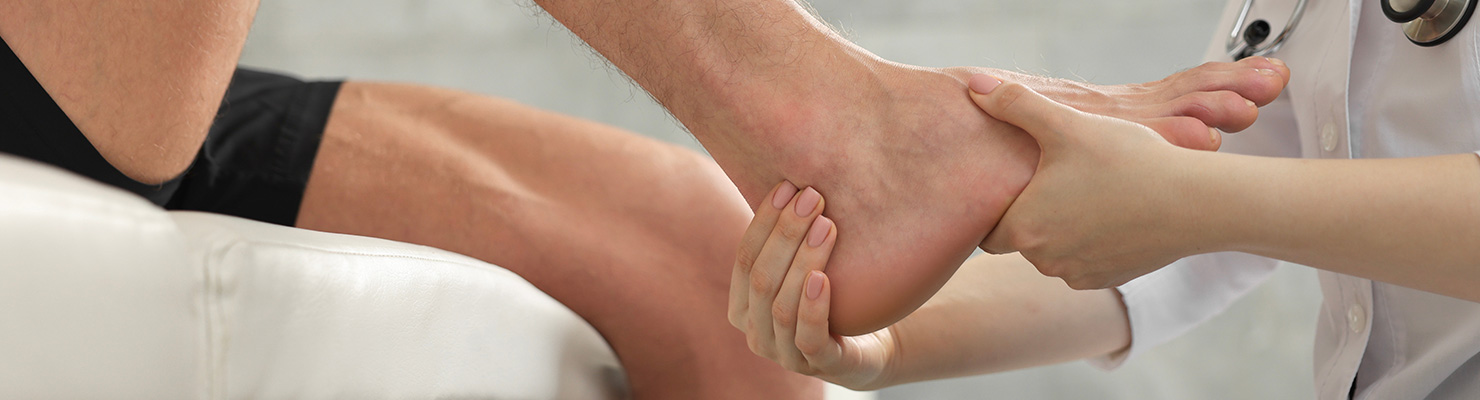
Pain or stiffness at the back of the heel that’s worse first thing in the morning or after activity is a common sign of Achilles tendinopathy. Ankle pain can also have a range of causes, from ligament and joint issues to biomechanical factors that place extra strain on the area. Both can be frustrating when they affect your training, your work, or your ability to get around comfortably — but they generally respond well to the right treatment. Brendan Coyle has over 20 years of clinical experience diagnosing and treating Achilles and ankle pain for patients across Balgowlah, Manly, and the Northern Beaches.
Achilles tendinopathy and ankle pain usually show up as one or a combination of the following:
Pain or stiffness at the back of the heel with your first steps out of bed
Discomfort that builds during or after running, walking or standing
Noticeable swelling, warmth or tenderness around the Achilles tendon or ankle
A feeling that your ankle gives way or feels unstable, especially on uneven ground
The Achilles tendon connects your calf muscles to your heel bone and is the tendon responsible for pushing you forward with every step, run or jump. Achilles tendinopathy develops when the tendon is placed under more repeated strain than it can tolerate, causing small changes in the tendon’s structure alongside pain, stiffness and sometimes swelling. Ankle pain can develop alongside this or separately, often relating to the ligaments, joint or surrounding soft tissue rather than the tendon itself.

Achilles tendinopathy is not usually a sudden injury — it develops gradually through repeated loading of the tendon, and it’s common among runners and athletes as well as people who have recently increased their activity levels. Left untreated, it can become a persistent problem that limits training and day-to-day movement, so early assessment generally leads to a more straightforward recovery.
A recent increase or change in training load — such as adding hill running, increasing distance too quickly, or returning to sport after a break — is a common trigger for Achilles tendinopathy. Tight or weak calf muscles place extra strain on the tendon, as can unsupportive footwear or a change in training surface. Ankle pain is often linked to previous sprains, joint stiffness, or biomechanical factors such as foot posture that alter how load travels through the ankle with each step.
You do not need to recognise every one of these. It is usually a combination, which is exactly why we assess rather than guess. And not all heel or ankle pain is Achilles tendinopathy — if your assessment points to a different cause, we’ll explain what’s going on and recommend the right course of treatment.
Every plan starts with understanding why the tendon or joint is under strain, not just where it hurts.

We start by talking through your symptoms, activity levels, footwear and history so we can understand your situation before we begin our assessment.

A biomechanical assessment examines your gait, foot posture and lower-limb mechanics to identify factors that may be placing increased stress on your Achilles tendon or ankle and contributing to your pain.

You will leave with a clear, plain-language explanation of what is driving your pain and what your treatment plan involves.

We put together a plan tailored to your assessment findings, targeting the specific factors placing load on the affected area. No two cases are the same, and your treatment will reflect that.
Depending on what we find, your plan may include one or more of the following:
Adjusting training or activity levels to allow the tendon or joint time to recover
Building strength and flexibility through the calf and lower limb to improve load tolerance
Offloads the affected area and provides support while it heals
Identifying footwear that may be contributing to the problem and advising on options that will help. See our footwear assessment and prescription service for more
Prescribed to correct the biomechanical factors placing excess load on the tendon or ankle. See custom foot orthotics for more on how we approach fitting and prescribing
For persistent Achilles tendinopathy that hasn’t responded to conservative treatment. See shockwave therapy for more

 (02) 9948 2555


