Posted by Balgowlah_admin in on September 16th, 2026
Foot pain that doesn’t ease with rest, or that’s worse with weight-bearing activity, can sometimes be a sign of a stress fracture. It’s a condition that needs a careful, staged approach to recovery, and most stress fractures heal well with the right management. Brendan Coyle has over 20 years of clinical experience assessing and managing foot stress fractures for patients across Balgowlah, Manly, and the Northern Beaches.
A foot stress fracture usually shows up as one or a combination of the following:
A dull or sharp ache that persists even when you’re off your feet
A specific spot on your foot that’s sore to touch or press
Mild swelling over the painful area, sometimes with bruising
Discomfort that worsens with standing, walking or running
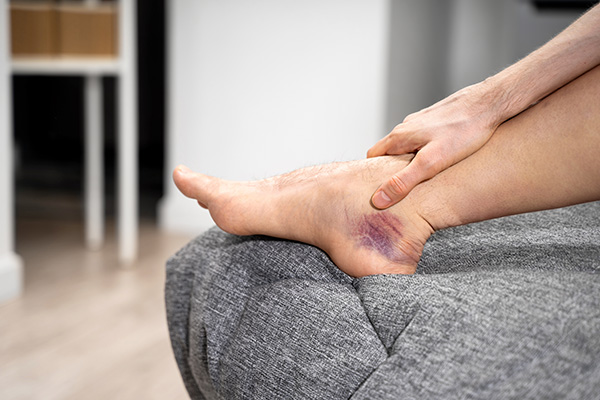
A stress fracture is a small crack or severe bruising within a bone, most often in the metatarsals — the long bones in the middle of your foot — caused by repeated stress rather than a single injury. It develops when bone is loaded faster than it can repair and adapt, most commonly from a sudden increase in high-impact activity such as running.
Stress fractures are not sudden injuries in the way a break from a fall is; they build gradually, and pain often starts mild and worsens over days or weeks if activity continues. They’re particularly common among runners and athletes, as well as people who have recently and rapidly increased their training. Continuing to load the bone can delay healing or worsen the fracture, so early assessment matters.
A rapid increase in training load — such as running further or more often than your body is used to — is one of the most common triggers, particularly when it happens over a short period without enough recovery. Worn-out or unsupportive footwear, training on hard surfaces, and foot posture issues that concentrate load through a smaller area of bone can all contribute. Reduced bone density, whether from nutrition, hormonal factors or other health conditions, can also increase risk.
You do not need to recognise every one of these. It is usually a combination, which is exactly why we assess rather than guess. And not all foot pain that persists is a stress fracture — an assessment helps confirm what’s going on and rule out other causes of ongoing pain.
Every plan starts with confirming the diagnosis, not just treating the symptoms.

We start by talking through your symptoms, activity levels, footwear and history so we can understand your situation before we begin our assessment.

A biomechanical assessment examines your gait, foot posture and lower-limb mechanics, and where a stress fracture is suspected, we’ll refer you for imaging such as an X-ray or MRI to confirm the diagnosis.

You will leave with a clear, plain-language explanation of what’s going on and what your treatment and recovery plan involves.

We put together a plan tailored to your specific fracture and activity goals, including a staged return to load-bearing activity. No two cases are the same, and your treatment will reflect that.
Depending on your fracture and your assessment findings, your plan may include one or more of the following:
Reducing or temporarily stopping weight-bearing activity to allow the bone to heal
Reducing load through the affected area where needed while healing progresses
A structured, gradual increase in load and training once healing is confirmed
Identifying footwear that may be contributing to the problem. See our footwear assessment and prescription service for more
Addressing the biomechanical factors that concentrated load on the bone. See custom foot orthotics for more on how we approach fitting and prescribing
Posted by Balgowlah_admin in on September 16th, 2026
A dull, aching pain along the inside of your shin that builds during exercise is a common sign of shin splints. It’s a frustrating injury, particularly for runners and anyone training regularly, but it generally responds well to the right treatment and a properly staged return to activity. Brendan Coyle has over 20 years of clinical experience diagnosing and treating shin splints and other lower-leg injuries for patients across Balgowlah, Manly, and the Northern Beaches.
Shin splints usually show up as one or a combination of the following:
A dull or sharp ache along the inside of your shin bone during or after exercise
Pain that builds as you run, walk or stand and eases with rest
Soreness along the shin when you press on it
Symptoms that started after increasing distance, intensity or changing surfaces
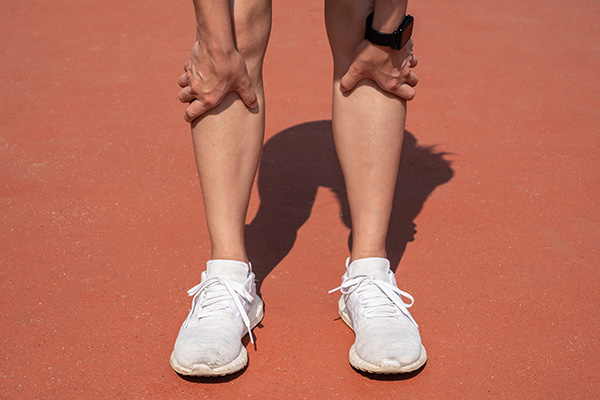
Shin splints, medically known as medial tibial stress syndrome, refers to pain along the inside edge of the shin bone caused by inflammation of the muscles, tendons and tissue surrounding the bone. It develops when the lower leg is placed under more repeated stress than it can tolerate, most often from running or other high-impact activity.
Shin splints is not a sudden injury — it develops gradually through repeated loading of the lower leg, and it’s particularly common among runners, dancers and military personnel, as well as people returning to exercise after a break. Left untreated, or if training continues without adjustment, it can progress toward a stress fracture, so early assessment and management matters.
A recent increase or change in training load — such as running further or faster than you’re used to, adding hill work, or switching from soft to hard surfaces — is one of the most common triggers. Worn-out or unsupportive footwear can add to the problem, as can foot posture issues such as flat feet, which alter how load travels up through the lower leg with each stride. Tight calf muscles and reduced ankle flexibility can also increase strain on the shin.
You do not need to recognise every one of these. It is usually a combination, which is exactly why we assess rather than guess. And not all shin pain is shin splints — a biomechanical assessment helps rule out other causes, such as a stress fracture, so you get the right treatment from the start.
Every plan starts with understanding why the lower leg is under strain, not just where it hurts.
We start by talking through your symptoms, activity levels, footwear and history so we can understand your situation before we begin our assessment.
A biomechanical assessment examines your gait, foot posture and lower-limb mechanics to identify factors that may be placing increased stress on your shins and contributing to your pain.
You will leave with a clear, plain-language explanation of what is driving your pain and what your treatment plan involves.
We put together a plan tailored to your assessment findings, targeting the specific factors placing load on your lower leg. No two cases are the same, and your treatment will reflect that.
Depending on what we find, your plan may include one or more of the following:
Adjusting training volume, intensity or surface while the tissue recovers
Targeted exercises for the calf and lower leg to reduce strain and improve load tolerance
Identifying footwear that may be contributing to the problem. See our footwear assessment and prescription service for more
Correcting the biomechanical factors placing load on the lower leg. See custom foot orthotics for more on how we approach fitting and prescribing
Offloads the affected area and provides support while it heals
Posted by Balgowlah_admin in on September 16th, 2026
Pain or stiffness at the back of the heel that’s worse first thing in the morning or after activity is a common sign of Achilles tendinopathy. Ankle pain can also have a range of causes, from ligament and joint issues to biomechanical factors that place extra strain on the area. Both can be frustrating when they affect your training, your work, or your ability to get around comfortably — but they generally respond well to the right treatment. Brendan Coyle has over 20 years of clinical experience diagnosing and treating Achilles and ankle pain for patients across Balgowlah, Manly, and the Northern Beaches.
Achilles tendinopathy and ankle pain usually show up as one or a combination of the following:
Pain or stiffness at the back of the heel with your first steps out of bed
Discomfort that builds during or after running, walking or standing
Noticeable swelling, warmth or tenderness around the Achilles tendon or ankle
A feeling that your ankle gives way or feels unstable, especially on uneven ground
The Achilles tendon connects your calf muscles to your heel bone and is the tendon responsible for pushing you forward with every step, run or jump. Achilles tendinopathy develops when the tendon is placed under more repeated strain than it can tolerate, causing small changes in the tendon’s structure alongside pain, stiffness and sometimes swelling. Ankle pain can develop alongside this or separately, often relating to the ligaments, joint or surrounding soft tissue rather than the tendon itself.

Achilles tendinopathy is not usually a sudden injury — it develops gradually through repeated loading of the tendon, and it’s common among runners and athletes as well as people who have recently increased their activity levels. Left untreated, it can become a persistent problem that limits training and day-to-day movement, so early assessment generally leads to a more straightforward recovery.
A recent increase or change in training load — such as adding hill running, increasing distance too quickly, or returning to sport after a break — is a common trigger for Achilles tendinopathy. Tight or weak calf muscles place extra strain on the tendon, as can unsupportive footwear or a change in training surface. Ankle pain is often linked to previous sprains, joint stiffness, or biomechanical factors such as foot posture that alter how load travels through the ankle with each step.
You do not need to recognise every one of these. It is usually a combination, which is exactly why we assess rather than guess. And not all heel or ankle pain is Achilles tendinopathy — if your assessment points to a different cause, we’ll explain what’s going on and recommend the right course of treatment.
Every plan starts with understanding why the tendon or joint is under strain, not just where it hurts.
We start by talking through your symptoms, activity levels, footwear and history so we can understand your situation before we begin our assessment.
A biomechanical assessment examines your gait, foot posture and lower-limb mechanics to identify factors that may be placing increased stress on your Achilles tendon or ankle and contributing to your pain.
You will leave with a clear, plain-language explanation of what is driving your pain and what your treatment plan involves.
We put together a plan tailored to your assessment findings, targeting the specific factors placing load on the affected area. No two cases are the same, and your treatment will reflect that.
Depending on what we find, your plan may include one or more of the following:
Adjusting training or activity levels to allow the tendon or joint time to recover
Building strength and flexibility through the calf and lower limb to improve load tolerance
Offloads the affected area and provides support while it heals
Identifying footwear that may be contributing to the problem and advising on options that will help. See our footwear assessment and prescription service for more
Prescribed to correct the biomechanical factors placing excess load on the tendon or ankle. See custom foot orthotics for more on how we approach fitting and prescribing
For persistent Achilles tendinopathy that hasn’t responded to conservative treatment. See shockwave therapy for more
Posted by Balgowlah_admin in on September 16th, 2026
If you’re living with diabetes, regular foot checks are one of the simplest ways to protect your long term foot health. Balgowlah Podiatry provides diabetic foot assessments for patients across Balgowlah, Manly and the Northern Beaches — checking circulation, sensation and skin health so small changes are picked up early, before they become bigger problems.
A diabetic foot assessment may be worth booking if:
Type 1 or type 2, and haven’t had a foot check recently
Numbness, tingling, wounds that are slow to heal, or changes in skin or nail health
Due to how long you’ve had diabetes, your blood sugar control, or other circulation related conditions
Regular monitoring can catch small issues before they become bigger problems
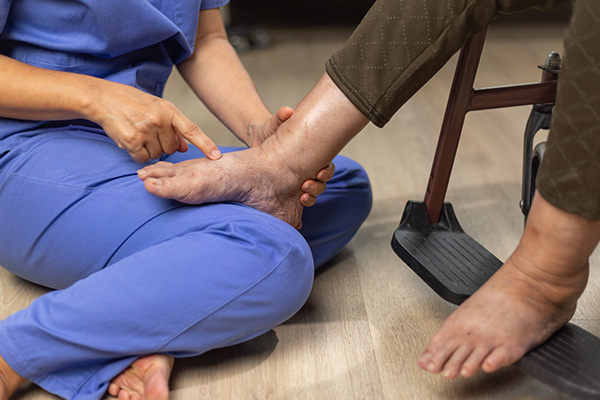
Diabetes can affect the nerves and blood vessels in your feet over time, which is why regular podiatry checks are recommended as part of your ongoing diabetes care. A diabetic foot assessment checks the circulation, sensation and general skin and nail health of your feet, so any early changes can be identified and managed before they develop into more serious problems.
These assessments are recommended at least once a year for most people with diabetes, though your podiatrist may recommend more frequent checks depending on your individual risk factors. Brendan works alongside your GP and other healthcare providers to keep your diabetes care coordinated.
Every assessment starts with understanding your history and individual risk factors, not just checking a box.
We talk through your diabetes history, blood sugar control and any changes you’ve noticed in your feet, so we understand your individual risk factors before we assess anything.
We check the circulation, sensation, and general skin and nail health of your feet, alongside a review of your footwear.
You’ll leave with a clear, plain-language explanation of your foot health and risk level, and what it means for your ongoing care.
We put together an ongoing care plan tailored to your risk level — including how often you should be reviewed, and referral to your GP or another specialist where needed.
Depending on your assessment findings, your ongoing care may include:
Managing thickened nails, corns or calluses, which carry higher risk for people with diabetes
Making sure your everyday shoes are protecting your feet. See our footwear assessment and prescription service for more
Where pressure areas or foot posture need extra support. See custom foot orthotics for more on how we approach fitting and prescribing
Working with your GP or a specialist if higher risk changes are found
Posted by Balgowlah_admin in on September 16th, 2026
Whether you’re training for your first fun run or you’ve been competing for years, sports-related foot and lower limb injuries can be frustrating to manage on your own. Brendan Coyle provides sports podiatry for athletes and active people across Balgowlah, Manly and the Northern Beaches — from niggling injuries that won’t settle to full biomechanical assessments for runners and other athletes.
Sports podiatry may be worth considering if you have:
Pain that flares up with running, training or sport and doesn’t fully settle with rest
The same ache or strain that keeps coming back each season or training block
You’re starting running or a new sport and want to reduce your injury risk from the outset
You’re preparing for a race or competition and want your feet, gait and footwear dialled in
Sports podiatry focuses on the feet and lower limbs of people who train and compete, whether that’s running, football, netball or any other sport that puts repeated load through your feet and legs. It combines biomechanical assessment, injury management and footwear advice, tailored to the specific demands of your sport and training load.
It isn’t just for elite athletes — anyone training regularly, from weekend runners to junior sports players, can benefit from understanding how their feet and biomechanics affect their performance and injury risk. Brendan draws on over 20 years of clinical experience to assess and treat sports-related injuries across a wide range of sports and activity levels.

Every plan starts with understanding your sport, your training load and what you’re working towards.
We talk through your sport, training history and current injury, so we understand the demands you’re placing on your body before we assess anything.
A biomechanical assessment examines your gait, foot posture and lower-limb mechanics under the kind of load relevant to your sport to identify what’s contributing to your injury.
You’ll leave with a clear, plain-language explanation of what’s driving your injury and what your treatment plan involves.
We put together a plan tailored to your sport and goals — including a return-to-training or competition timeline where relevant, rather than a generic recovery plan.
Depending on your injury and your sport, your plan may include one or more of the following:
Adjusting training volume or intensity while the injury settles
Prescribed for the specific demands of your sport and footwear
Making sure your training and competition shoes are supporting your feet. See our footwear assessment and prescription service for more
Offloading an injured area and providing support while it heals
For persistent injuries that haven’t responded to conservative treatment. See shockwave therapy for more
Posted by Balgowlah_admin in on September 16th, 2026
If you’ve been dealing with chronic heel pain, Achilles pain, or another stubborn injury that just won’t budge, shockwave therapy can be an effective next step in your treatment plan. While it isn’t the right option for every injury, it’s a non-invasive treatment that can help when conservative care alone hasn’t resolved persistent pain. Brendan Coyle offers it at Balgowlah Podiatry for patients across Balgowlah, Manly and the Northern Beaches.
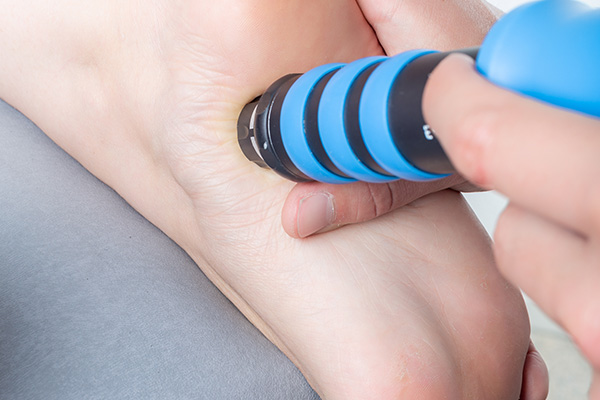
Shockwave therapy is a non-invasive treatment that uses a handpiece and transmitter to deliver targeted acoustic pressure waves to injured tissue. At a cellular level, these waves stimulate the body’s natural healing response, increasing blood flow and encouraging the formation of new blood vessels to create a better environment for tissue repair. Research has also shown that shockwave therapy influences the body’s pain-regulating mechanisms, helping to provide localised pain relief. It isn’t usually a first-line treatment, so during your consultation, Brendan will talk you through whether it’s an appropriate option for your specific injury.
Shockwave therapy is generally considered for chronic or persistent injuries that haven’t responded to standard treatment. It is worth discussing if you have:
Every plan starts with confirming shockwave therapy is the right option for your injury, not applying it as a default.
We talk through your injury, how long you’ve had it, and what you’ve already tried, so we understand your history before recommending treatment.
A biomechanical assessment examines your gait, foot posture, and lower-limb mechanics to identify factors that may be increasing stress on the injured area and contributing to your pain.
Sessions are relatively short and carried out in clinic. Most people have a short course of sessions spaced roughly a week apart, though this varies depending on your injury and how you respond.
We check in on your progress throughout your course of treatment and adjust your broader plan, including load management and footwear or orthotics.
Shockwave therapy is rarely used alone. Depending on your injury, your plan may also include:
Adjusting training or activity levels while the tissue recovers
Targeted exercises to support the area and reduce ongoing strain
identifying footwear that may be contributing to the problem. See our footwear assessment and prescription service for more
correcting the biomechanical factors placing load on the injured tissue. See custom foot orthotics for more on how we approach fitting and prescribing
Posted by Balgowlah_admin in on September 2nd, 2026
Heel pain that’s worst with your first few steps in the morning, or after sitting for a while, is a classic sign of plantar fasciitis. While there can be multiple causes of heel pain, plantar fasciitis is one of the most common conditions we see at Balgowlah Podiatry. It can be a frustrating condition, particularly when it affects your training, your work, or simply getting around comfortably – but the good news is that it responds well to the right treatment. Brendan Coyle has over 20 years of clinical experience diagnosing and treating plantar fasciitis and other causes of heel pain for patients across Balgowlah, Manly, and the Northern Beaches.
Plantar fasciitis usually shows up as one or a combination of the following:
Sharp or stabbing pain under your heel with your first steps out of bed
Eases as you move, then returns after standing or walking for a while
Sore to touch, especially right at the base of your heel
Tightness or pain through the arch, often worse after exercise or long periods on your feet
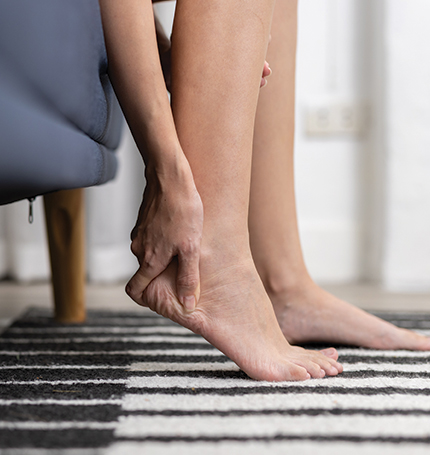
A thick band of tissue called the plantar fascia runs along the bottom of your foot, connecting your heel to your toes. The plantar fascia acts as a dynamic spring beneath your arch. With every step, it absorbs and stores mechanical energy as your foot flattens, then releases that energy to help propel you forward — while also absorbing the impact forces traveling up through your foot. This spring-like action is what allows your arch to support your body weight efficiently, step after step. When it is placed under more strain than it can handle, small tears and inflammation can develop, which cause the pain.
Plantar fasciitis is not a sudden injury. It develops gradually through repeated stress on the plantar fascia and affects a wide range of people, from runners and athletes to those who spend long hours standing at work. Left untreated, it can become a persistent and limiting problem that affects your daily movement and quality of life.
There’s rarely just one cause. A recent increase or change in activity, such as starting a new type of exercise, switching training surfaces, or a sudden jump in training load, is a common trigger, as is spending long hours on your feet on hard floors. Unsupportive or worn-out footwear can add to the problem, as can foot posture issues such as flat feet or high arches, which alter how load is distributed through the fascia. Tight calf muscles limit ankle movement and place extra strain on the arch, while increased load through the feet — such as from weight gain or pregnancy can also be a contributing factor.
You do not need to recognise every one of these. It is usually a combination, which is exactly why we assess rather than guess. And not all heel pain is plantar fasciitis — if your assessment points to a different cause, we’ll explain what’s going on and recommend the right course of treatment.
Every plan starts with understanding why the fascia is under strain, not just where it hurts.
We start by talking through your symptoms, activity levels, footwear and history so we can understand your situation before we begin our assessment.
A biomechanical assessment examines your gait, foot posture and lower-limb mechanics to identify factors that may be placing increased stress on your plantar fascia and contributing to your pain.
You will leave with a clear, plain-language explanation of what is driving the strain on your plantar fascia and what your treatment plan involves.
We put together a plan tailored to your assessment findings, targeting the specific factors placing load on your fascia. No two cases are the same, and your treatment will reflect that.
Depending on what we find, your plan may include one or more of the following:
Targeted exercises to reduce tension in the plantar fascia and calf muscles, and support tissue recovery
Building strength through the foot and calf to improve load tolerance and reduce strain on the plantar fascia
Offloads the plantar fascia and provides immediate pain relief while the tissue heals
Identifying footwear that may be contributing to the problem and advising on options that will help. See our footwear assessment and prescription service for more
Prescribed to correct the biomechanical factors placing excess load on the plantar fascia. See custom foot orthotics for more on how we approach fitting and prescribing
For persistent cases that haven’t responded to conservative treatment, this stimulates the body’s natural healing response in the affected tissue. We can talk through whether it’s right for you at your consultation
Posted by Balgowlah_admin in on November 23rd, 2022
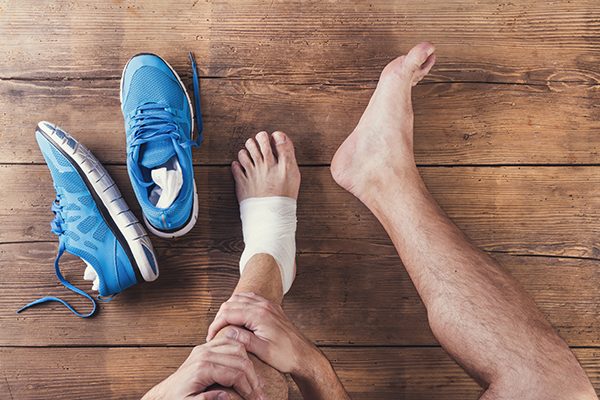
Do you have foot, ankle, or lower leg pain? Or perhaps something just doesn’t look or feel right? (e.g. flat feet, bunions, or knock knees). Our Podiatrist, Brendan Coyle, has 20 years’ experience in the field of lower limb biomechanics and is expertly placed to work out what is going on, why it’s happening, and how to fix it.
We’ll perform a biomechanical assessment to identify the source of your pain, provide you with an accurate diagnosis, ascertain the cause and contributing factors, and provide you with a comprehensive treatment plan.
Even in the absence of pain, a biomechanical assessment allows us to identify and address structural and functional lower limb problems to help prevent injury and/or improve performance.
We set aside 1 hour to ensure your pain or problem is assessed and managed without cutting corners. Your appointment will consist of:
The consultation – we set aside the time to listen and understand your concerns and individual requirements. We’ll discuss your presenting concern, injury history, activity levels, goals, expectations, and more. Information collected here helps guide the assessment.
The assessment – we perform a non-weight bearing and weight bearing examination. Your pain or injury will dictate how much we’ll get you moving but, typically, we’ll have you sitting, standing, walking, running, or whatever it takes to identify your problem and any contributing factors. A footwear assessment will also be included in the assessment process.
The diagnosis – you’ll leave with detailed explanations and answers, so that you understand the ins and outs of your pain or injury.In most cases, we’re able to clinically diagnose your pain, however, if it is inconclusive, we can investigate further through scans, tests, or referrals to professionals in our trusted local referral network.
The treatment plan – we will provide you with individualised short-, medium- and long-term solutions. Our goal is to resolve your problem as quickly as possible, but we also need to equip you with long-term strategies to prevent future issues.
Treatment will always include education about your pain or injury and its contributing factors. This is vital for short and long-term management. Other treatment options include:
Posted by Balgowlah_admin in on November 23rd, 2022

When it comes to the world of footwear, one can be easily overwhelmed by choice. Athletic and active footwear has grown leaps and bounds over the past decade. We are experts in this field and can take the guesswork out of picking the right shoe.
Whilst there is no one right shoe for you, we have the experience and knowledge to help significantly narrow down the choice. We can provide advice on:
Footwear has a huge influence on our feet, legs, and bodies in general. The right shoe can have one functioning well and in comfort, whilst the wrong shoe can be a prime contributor to pain, injury, and poor performance.
If you’re attending with pain or injury, a footwear assessment is part of our comprehensive biomechanical assessment. We will assess your footwear both off and on to determine if they are a contributing factor to your problem. You will then be provided with advice and a prescription for new shoes, if required.
In the absence of pain or injury, a close look at your footwear and expert advice on what you should and should not be wearing is important in preventing problems from developing.
Posted by Balgowlah_admin in on November 23rd, 2022

Our Sports Podiatrist, Brendan Coyle, has been prescribing quality custom orthotics for 20 years. He has prescribed orthotics to international rugby players, professional footballers, amateur sportsmen, runners, walkers, and workers alike. He has the experience and knowledge to fit comfortable, functional, and effective foot orthotics, customised to your individual requirements.
Foot orthotics are specially made shoe inserts designed to help heal or prevent injury, relieve pain, address poor biomechanics, and even improve performance.
As we stand, walk, run and move, there are pressures and forces acting on our feet that can contribute to pain or injury. Foot orthotics are used to alter these pressures and forces and can be effective in addressing pains and injuries of the feet, ankles, legs, hips, and back.
Custom orthoses are just that, custom. We can make orthotics that are firm and rigid, soft and flexible, and everything in between. Your orthotics are prescribed, if required, following a thorough biomechanical analysis to determine your individual requirements. We consider your injury history, footwear, foot type, and more, before prescribing your orthotics.
Precision 3D scanning and the most advanced design and manufacture technology is used to ensure your orthotics suit your unique foot shape, biomechanics, footwear, and activity type.
We prescribe:
In many cases, foot orthotics can be avoided. We won’t prescribe custom orthotics if there are effective alternative treatment options, or we believe their benefit to you would be limited. If orthotics are prescribed, seldom are they a stand-alone treatment. Soft tissue programs, footwear advice, activity modification, strappings, paddings, and various other modalities of treatment almost always accompany their prescription.
Whilst orthotics work best in certain shoes, they can be made to fit almost any shoe:
We will give you advice on the footwear best suited to address your pain, injury, and other individual requirements.
At your fitting appointment, we will ensure your orthotics fit well to your feet and your shoes. We will get you standing and walking to ensure they’re comfortable and ready to wear. You will be provided with instructions detailing the first few weeks of their use, and we will discuss any review requirements. Rarely do we have issues with our orthotics, but in the event that there’s something not quite right, we guarantee that these concerns will be addressed and rectified.

 (02) 9948 2555