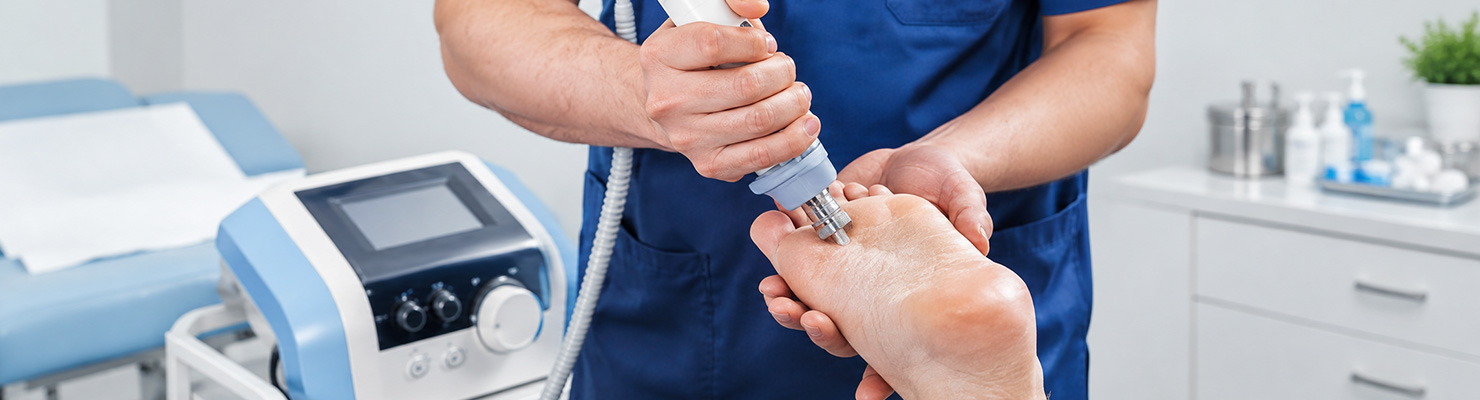
If you’ve been dealing with chronic heel pain, Achilles pain, or another stubborn injury that just won’t budge, shockwave therapy can be an effective next step in your treatment plan. While it isn’t the right option for every injury, it’s a non-invasive treatment that can help when conservative care alone hasn’t resolved persistent pain. Brendan Coyle offers it at Balgowlah Podiatry for patients across Balgowlah, Manly and the Northern Beaches.
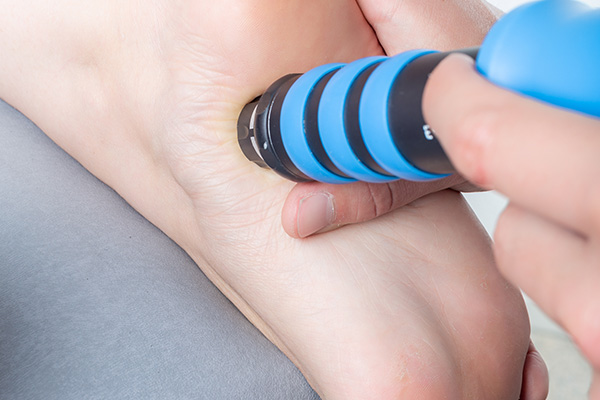
Shockwave therapy is a non-invasive treatment that uses a handpiece and transmitter to deliver targeted acoustic pressure waves to injured tissue. At a cellular level, these waves stimulate the body’s natural healing response, increasing blood flow and encouraging the formation of new blood vessels to create a better environment for tissue repair. Research has also shown that shockwave therapy influences the body’s pain-regulating mechanisms, helping to provide localised pain relief. It isn’t usually a first-line treatment, so during your consultation, Brendan will talk you through whether it’s an appropriate option for your specific injury.
Shockwave therapy is generally considered for chronic or persistent injuries that haven’t responded to standard treatment. It is worth discussing if you have:
Every plan starts with confirming shockwave therapy is the right option for your injury, not applying it as a default.

We talk through your injury, how long you’ve had it, and what you’ve already tried, so we understand your history before recommending treatment.

A biomechanical assessment examines your gait, foot posture, and lower-limb mechanics to identify factors that may be increasing stress on the injured area and contributing to your pain.

Sessions are relatively short and carried out in clinic. Most people have a short course of sessions spaced roughly a week apart, though this varies depending on your injury and how you respond.

We check in on your progress throughout your course of treatment and adjust your broader plan, including load management and footwear or orthotics.
Shockwave therapy is rarely used alone. Depending on your injury, your plan may also include:
Adjusting training or activity levels while the tissue recovers
Targeted exercises to support the area and reduce ongoing strain
identifying footwear that may be contributing to the problem. See our footwear assessment and prescription service for more
correcting the biomechanical factors placing load on the injured tissue. See custom foot orthotics for more on how we approach fitting and prescribing

 (02) 9948 2555


